When Did You Last Check In With Yourself?
We’re told to check so many things about our health. But what happens when you check your mental health, realise you’re not okay - and ask for help?
This week was Women’s Health Week.
And there are so many things we’re encouraged to keep an eye on as women.
Our blood pressure. Blood sugar. Cholesterol. Hormones. Skin. Breasts. Cervical screening. Eyes. Teeth.
The list seems to get longer as we get older.
We book appointments. Have blood tests. Get things checked. Or, if we’re being completely truthful, put them off for six months and then eventually get them checked.
But there’s another check I don’t think we always remember to do.
How is my mental health?
Not the automatic “How are you?”
“Good, thanks.”
I mean actually checking in.
How am I coping?
Am I sleeping?
Am I enjoying things I normally enjoy?
Am I constantly overwhelmed?
Am I withdrawing from people or avoiding things?
Is my world becoming smaller?
Am I actually okay, or have I just become very good at getting everything done?
That last question has been sitting with me this week.
Perhaps because it has been a week of appointments and illness and work and family and yet another trip to Bendigo.
Perhaps because we’ve just had Women’s Health Week.
Perhaps because I’m now thirteen days into my seventh Liptember, talking about women’s mental health every single day.
Or perhaps because I know what it feels like to realise the answer to that question is no.
Years ago, a workplace bullying allegation was made against me.
It became a formal matter, which meant I couldn’t openly talk about what was happening while it was being dealt with.
Eventually, the allegation was not substantiated.
But the impact of it didn’t end there.
I struggled.
Really struggled.
I didn’t want to go to work.
I didn’t want to go down the street.
I didn’t want to attend my markets.
I became incredibly conscious of what other people might think of me. Who knew what? What had they heard? What did they believe?
And because I couldn’t openly talk about what was happening, so much of that stayed inside my own head.
From the outside, I was still functioning.
I went to work.
I looked after my family.
I did the things that needed doing.
I kept going.
But functioning and being okay are not necessarily the same thing.
Eventually, I recognised that I needed some help.
And I did exactly what we are constantly encouraged to do when we’re struggling with our mental health.
I asked for it.
I made an appointment with a doctor.
I wasn’t asking somebody to save my life that day. I knew I wasn’t at immediate risk of harming myself.
What I knew was that I wasn’t okay.
I wanted a referral to somebody qualified that I could sit down with and talk to about what had happened, how it had affected me and how I could work through it.
There was a mental health assessment.
There were lots of questions.
I answered them.
And I walked away without the help I had gone there to ask for.
I remember feeling angry.
I still feel angry when I think about it.
Because surely we don’t want people to wait until they’re at breaking point before we decide they need support.
I knew something was wrong.
I recognised changes in myself.
I asked for help before I reached a crisis.
And my experience was that the system didn’t help me when I needed it.
My faith in the mental health system broke a little that day.
I want to be very careful here.
I’m not telling this story to discourage anybody from seeking professional help.
Please seek help.
There are wonderful doctors, psychologists, counsellors, mental health professionals and support services helping people every day.
My experience is not everybody’s experience.
But it was mine.
And if I knew I needed help, asked for it and still walked away without the support I was seeking, I have often wondered:
How many other women have walked away feeling exactly the same?
I wish I could tell you I eventually got the help I wanted, worked through everything and put the whole experience neatly behind me.
That isn’t my story.
Some of it still follows me.
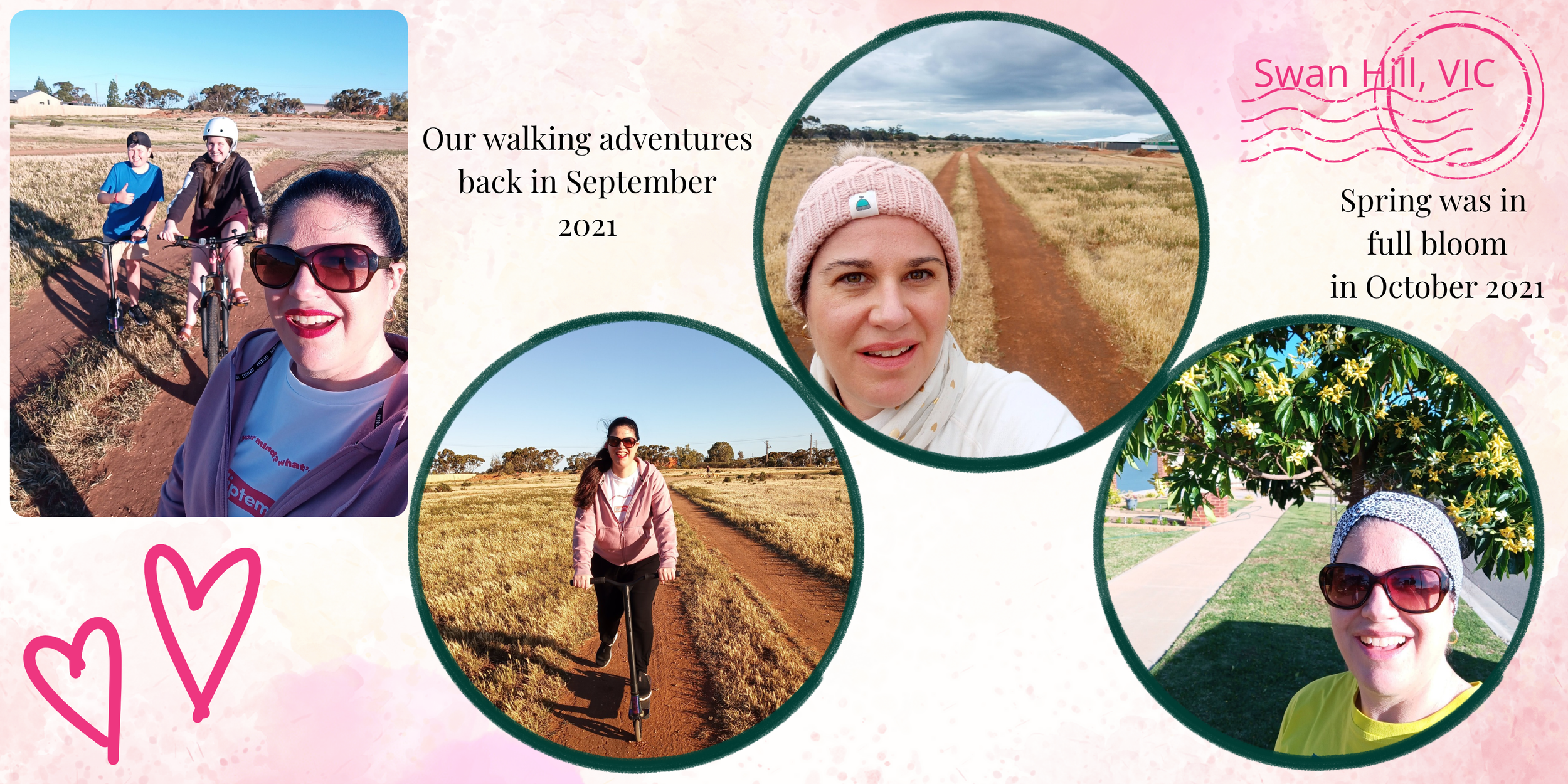
Before all of this happened, I happily walked around my neighbourhood.
During COVID and homeschooling, walking with the kids became part of our days. We documented our little walks, took photos and shared bits and pieces on Facebook.
Looking back through those photos, I had forgotten just how much we did it. There are photos of us on paths, dirt tracks and ordinary suburban streets - walking, riding bikes and scooters, dancing, twirling, mucking around and simply being out in our little patch of the world.
Somewhere along the way, I stopped.
These days I’m much more comfortable walking on my treadmill in the shed than walking the streets around my own home.
There are even ordinary business ideas I’ve talked myself out of because they would require me to make myself more visible locally.
That is difficult for me to admit.
Because it means something that happened years ago is still influencing choices I make today.
And yes, that makes me angry too.
I don’t want to give that period of my life - or the people involved in it - any more of my energy.
But pretending it had no lasting impact doesn’t make that impact disappear.
Perhaps acknowledging it is part of checking in too.
This week, as part of Liptember, I’ve shared statistics about women’s mental health alongside experiences such as endometriosis, pelvic floor disorders, social anxiety, menopause and body image.
And one thing has stood out to me.
Our physical health and our mental health do not live in separate boxes.
Pain affects us.
Hormonal changes can affect us.
Illness affects us.
Grief affects us.
Work affects us.
Relationships affect us.
Caring for other people affects us.
The hundreds of ordinary pressures we carry around every day can affect us.
Yet somehow mental health can still become the check-up we don’t realise we’ve skipped.
Particularly for women who are very good at keeping everything moving.
We make the appointments.
Remember what everybody needs.
Meet the deadlines.
Do the groceries.
Put on another load of washing.
Take somebody else to the doctor.
Answer the emails.
Show up at work.
Keep the household running.
And when someone asks how we are?
We answer, “Good, thanks.”
Maybe we are.
But maybe it’s worth checking.
Really checking.
Because mental health doesn’t always announce itself with a crisis.
Sometimes it looks like withdrawing.
Avoiding.
Losing confidence.
Not enjoying things anymore.
Feeling constantly overwhelmed.
Making your world a little smaller because that feels safer.
Or simply knowing:
I don’t feel like myself.
That deserves attention too.
Maybe, after seven years, I finally understand why I keep coming back to Liptember.
Thirty different lip colours every September.
Some beautiful.
Some questionable.
And occasionally one so ridiculous that somebody stops scrolling just to work out what on earth I’ve put on my lips.
That part is fun.
But the lipstick has never been the most important part.
The conversation is.
When I first started Liptember, there were mums homeschooling through COVID, women isolated from their usual support networks and conversations about mental health that needed to happen. I wanted to raise awareness. I wanted to raise some money. And yes, if I’m being completely truthful, it also gave me something meaningful to create and talk about for a month.
Seven years later, I think I understand that there was something more underneath it.
I know what it feels like to realise you’re not okay.
I know what it takes to ask for help.
And I know how it feels to walk away without the help you thought you were brave enough to ask for.
Maybe this is why I keep talking.
Because if it happened to me, I doubt I’m the only one.
And perhaps sharing my story means another woman recognises something in her own.
So after Women’s Health Week, here’s my reminder - to you and to myself.
Check your blood pressure.
Check your blood sugar.
Talk about your hormones.
Book the breast check.
Keep an eye on you skin.
Make the appointment about the thing that’s been niggling at you.
But while you’re checking your body, check in with your mind too.
Ask yourself the questions we so readily ask everybody else.
How am I, really?
Is something changing?
Am I coping?
Do I need some support?
And if the answer tells you something isn’t right, please reach out.
Try your doctor. Talk to somebody you trust. Contact a professional support service.
And if the first door doesn’t open, as unfair and exhausting as that can feel, please try another one.
Because asking for help should never require you to prove that you are struggling enough to deserve it.
And perhaps those of us on the other side of the question need to remember something too.
When somebody tells us they’re not okay, we don’t need to decide whether they’re struggling enough.
We don’t necessarily need to fix it.
Sometimes our first job is much simpler.
Listen.
Because sometimes somebody has already had to work incredibly hard just to say:
I’m not okay.
Be real, not perfect. Be Kind. Be Brave. Be Yourself.